

Internal & External Infrared Thermography Building Survey


Project Description
AiroTech were asked to carry out an internal and external Infrared thermography survey on a 1970’s constructed 3 terrace houses just outside Glasgow, Scotland. The owners of the East and West end terrace houses were experiencing water ingress from the top of the lounge windows during periods of heavy rainfall. The South facing walls were also becoming saturated during these heavy down pours. Various remedial repair measures had been tried with no success but the route cause of the water ingress had not been identified.
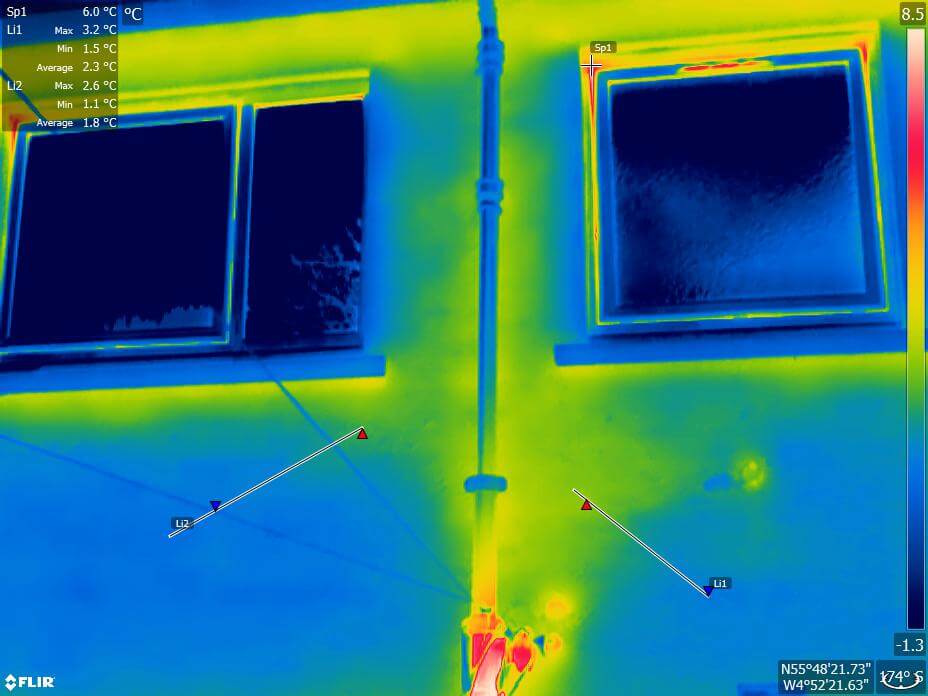
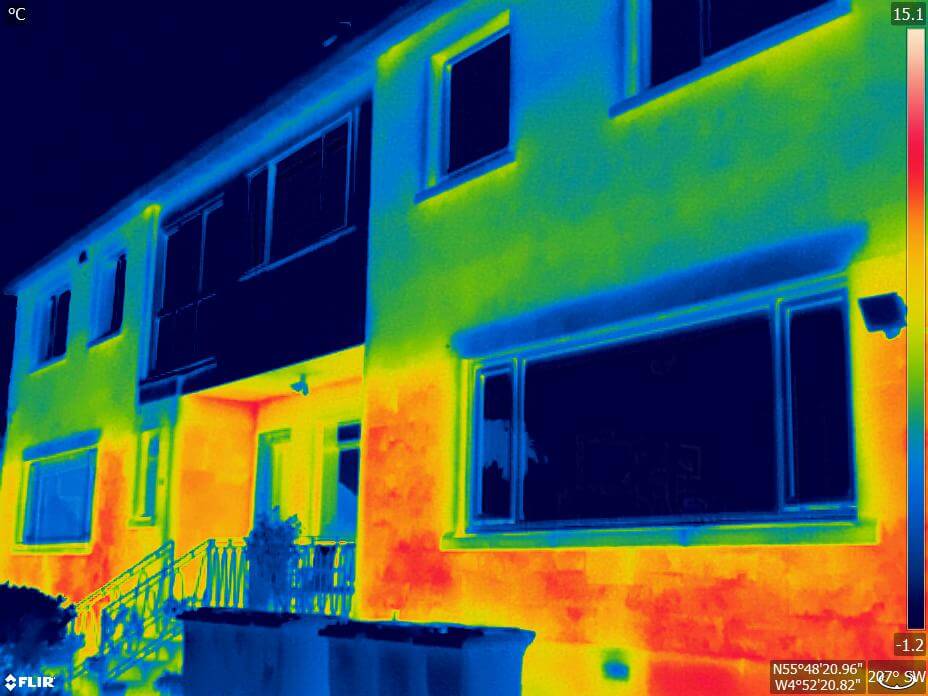
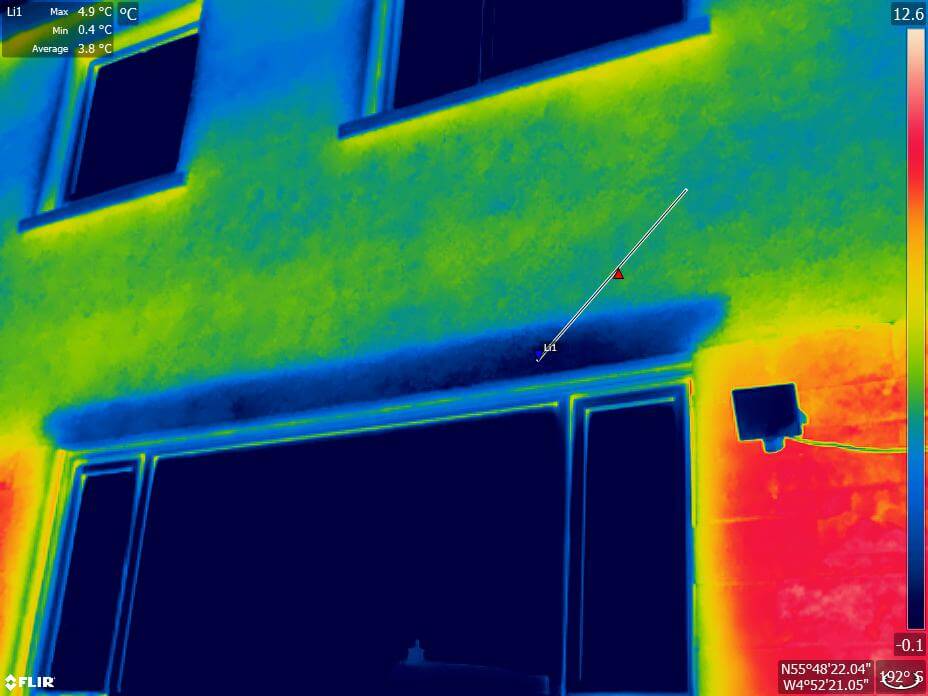
AiroTech used the following strategy to locate the source of the water ingress into the houses. As the sun heats the external walls on a clear day the dry areas of the walls reach a higher temperature than the wet areas due to the lower thermal capacitance (specific heat) of the former. Normally 1-2 hours after sunset a thermal inversion takes place. Due to higher thermal capacitance of water, wet areas conduct and store heat better than dry ones, so areas of moisture accumulation can be identified as hotspots of elevated temperature using an Infrared camera during the cooling of a building after sunset.
The thermal anomalies identified include, hairline crack in wall, uneven distribution of cavity wall insulation, water migration in wall cavity and steel lintel cold thermal bridge
Project Details


Needing Infrared Thermography?
If you require Infrared Thermography for your Commercial or Residential property, please contact AiroTech for a quotation or to discuss your requirements.